


Die Casting Process: A Complete Guide to Types, Materials, Advantages, and Applications
Introduction
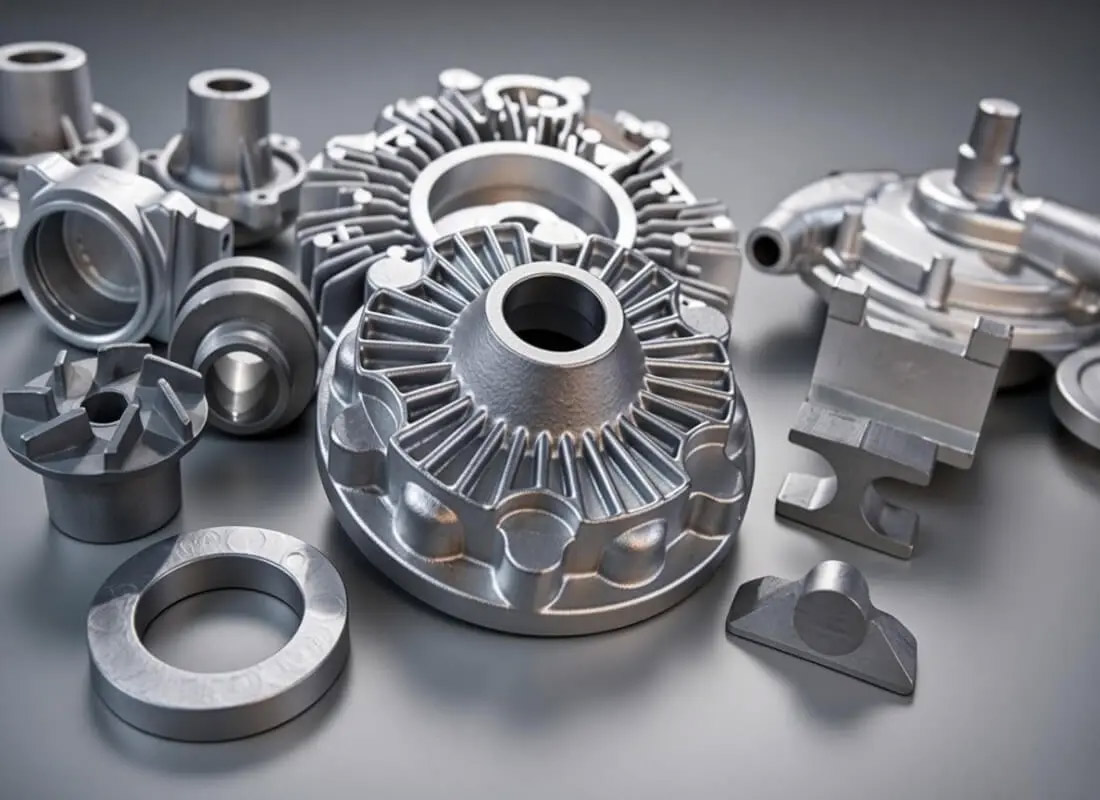
Die casting is one of the most widely used metal manufacturing processes for producing high-precision metal components in large volumes. From automotive parts and electronic housings to industrial machinery and aerospace components, die casting offers excellent dimensional accuracy, repeatability, and production efficiency.
Because of its ability to manufacture complex metal parts with tight tolerances and smooth surface finishes, die casting has become an essential process in modern precision manufacturing.
In this article, we’ll explore:
· What die casting is
· Types of die casting processes
· Common die casting materials
· Advantages and disadvantages
· Surface finishing methods
· Industrial applications
· How to choose the right die casting solution
What Is Die Casting?
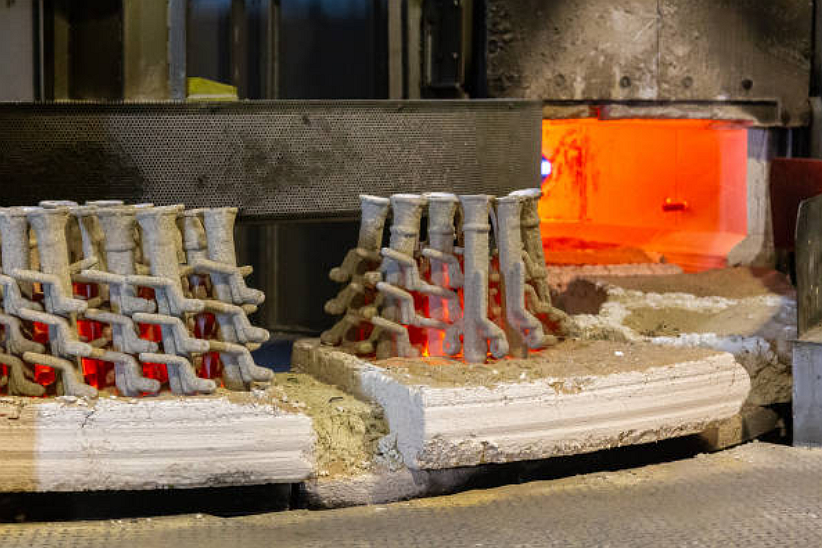
Die casting is a metal casting process that involves injecting molten metal into a hardened steel mold (called a die) under high pressure. After cooling and solidification, the metal part is ejected from the mold and may undergo additional machining or surface finishing.
The process is ideal for producing:
· Complex geometries
· Thin-wall components
· Lightweight metal parts
· High-volume production runs
· Precision industrial components
Compared with traditional sand casting, die casting offers higher precision, faster production speed, and better surface quality.
Types of Die Casting Processes
1. Hot Chamber Die Casting
Hot chamber die casting is mainly used for low melting point alloys such as:
· Zinc
· Tin
· Lead
· Magnesium alloys
In this process, the injection system is immersed directly in the molten metal.
Advantages
· Faster production cycles
· High production efficiency
· Excellent dimensional consistency
· Lower oxidation risk
Common Applications
· Hardware components
· Electronic housings
· Small precision parts
· Consumer products
2. Cold Chamber Die Casting
Cold chamber die casting is used for metals with higher melting points, especially:
· Aluminum alloys
· Copper alloys
· Some magnesium alloys
Molten metal is first poured into a separate chamber before high-pressure injection into the die.
Advantages
· Suitable for stronger alloys
· Reduced machine corrosion
· Better for larger structural parts
· Excellent mechanical properties
Common Applications
· Automotive components
· Engine housings
· Industrial machinery parts
· Aerospace components
Main Steps in the Die Casting Process
Mold Preparation
Before casting begins, the die mold is cleaned and lubricated to ensure smooth metal flow and easy part ejection.
Metal Melting and Injection
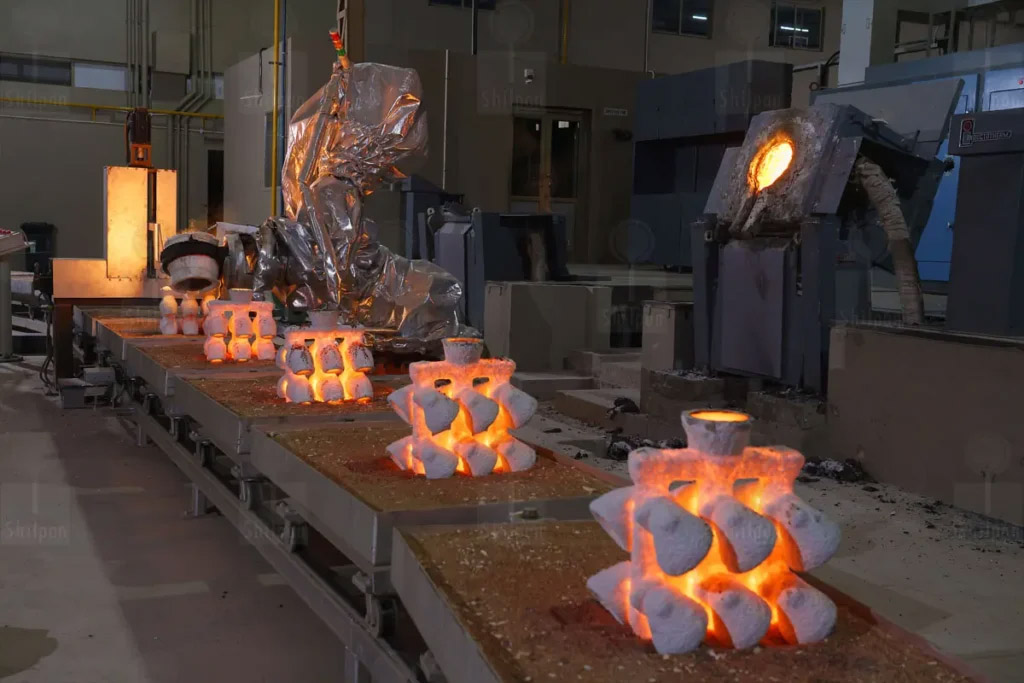
Metal alloys are heated to molten form and injected into the die cavity under high pressure.
This pressure helps:
· Reduce porosity
· Improve dimensional accuracy
· Create detailed shapes
Cooling and Solidification
The molten metal rapidly cools and solidifies inside the mold.
Proper cooling is critical for:
· Mechanical strength
· Surface quality
· Dimensional stability
Ejection
Once solidified, the casting is ejected from the die using ejector pins.
Trimming and Post Processing
Excess material such as runners and flash is removed. Additional operations may include:
· CNC machining
· Sand blasting
· Powder coating
· Anodizing
· Electroplating
· Painting
Common Materials Used in Die Casting
Aluminum Die Casting
Aluminum is one of the most popular die casting materials because of its:
· Lightweight properties
· High strength-to-weight ratio
· Corrosion resistance
· Excellent thermal conductivity
Common Aluminum Alloys
· A380
· A360
· ADC12
· A413
Typical Applications
· Automotive housings
· Heat sinks
· Machinery parts
· Aerospace structures
Zinc Die Casting
Zinc alloys are ideal for high-precision small parts.
Advantages
· Excellent fluidity
· High dimensional accuracy
· Smooth surface finish
· Good ductility
Common Applications
· Hardware
· Connectors
· Decorative parts
· Electronic components
Magnesium Die Casting
Magnesium is extremely lightweight and commonly used in industries where weight reduction is critical.
Applications
· Aerospace
· Automotive
· Portable electronic devices
Copper Alloy Die Casting
Copper alloys provide:
· Excellent conductivity
· Corrosion resistance
· High strength
Applications
· Electrical components
· Industrial fittings
· Conductive parts
Advantages of Die Casting
High Precision and Tight Tolerances
Die casting produces accurate parts with excellent consistency, reducing the need for extensive machining.
Excellent Surface Finish
Compared to many other casting methods, die casting creates smoother surfaces suitable for painting, plating, and coating.
Fast Production Speed
The process is highly efficient for medium and high-volume production.
Complex Shapes and Thin Walls
Die casting can produce intricate geometries difficult to achieve through conventional machining.
Cost-Effective for Large Production Runs
Although mold tooling costs are high initially, the low per-part production cost makes die casting highly economical for mass production.
Disadvantages of Die Casting
Despite its many advantages, die casting also has limitations.
High Initial Tooling Cost
Die molds are expensive and require precision manufacturing.
Not Ideal for Very Large Parts
Large components may be difficult or uneconomical to produce.
Porosity Issues
Without proper process control, trapped gas may create internal porosity.
Limited High-Melting Metals
Extremely high-temperature metals are less suitable for conventional die casting.
Surface Finishing Options for Die Cast Parts
Powder Coating
Improves durability, corrosion resistance, and appearance.
Anodizing
Common for aluminum die castings to enhance corrosion resistance and aesthetics.
Electroplating
Adds decorative or protective metal coatings.
Sand Blasting
Creates uniform surface texture and removes imperfections.
Painting
Improves visual appearance and environmental protection.
Applications of Die Casting
Automotive Industry
· Engine housings
· Gearboxes
· Transmission components
· Brackets and connectors
Aerospace Industry
· Lightweight structural components
· Precision aircraft parts
Electronics Industry
· Heat sinks
· Switchgear components
· Electrical housings
Medical Industry
· Medical equipment housings
· Precision instrument parts
Industrial Machinery
· Pump housings
· Valve bodies
· Mechanical structures
Die Casting vs Other Manufacturing Processes
Compared with CNC machining, forging, and sand casting:
|
Process |
Main Advantage |
|
Die Casting |
High-volume precision production |
|
CNC Machining |
Extreme precision & flexibility |
|
Forging |
Superior mechanical strength |
|
Sand Casting |
Lower tooling cost for large parts |
Many manufacturers combine die casting with CNC machining for tighter tolerances and critical features.
Conclusion
Die casting is a highly efficient and versatile manufacturing process widely used for producing precision metal parts across many industries.
Its advantages include:
· High production efficiency
· Tight tolerances
· Excellent surface finish
· Lightweight component manufacturing
· Cost-effective mass production
From aluminum die casting to zinc and magnesium alloys, manufacturers can choose materials based on strength, corrosion resistance, conductivity, and application requirements.
As modern industries continue demanding lightweight, durable, and high-precision components, die casting remains one of the most important metal manufacturing technologies worldwide.
About T&B Manufacturing
At T&B Manufacturing, we specialize in custom metal manufacturing solutions for global industrial customers.
Our production capabilities include:
· Die casting
· CNC machining
· Investment casting
· Sand casting
· Forging
· Precision metal fabrication
We manufacture custom metal components using:
· Aluminum alloys
· Zinc alloys
· Stainless steel
· Brass
· Bronze
· Carbon steel
Our products are widely used in:
· Automotive
· Agricultural machinery
· Industrial equipment
· Marine systems
· Construction hardware
· Energy and infrastructure industries
With advanced manufacturing equipment, strict quality control, and rich export experience, T&B Manufacturing provides reliable OEM metal parts and precision manufacturing services for customers worldwide.
If you are looking for a trusted die casting manufacturer for custom metal parts, T&B Manufacturing is ready to support your next project.