


CNC Lathe vs CNC Milling: Understanding the Key Differences in Precision Machining
In today's manufacturing industry, CNC machining plays a critical role in producing high-precision metal and plastic components for sectors such as automotive, aerospace, energy, industrial equipment, and medical devices. Among the most commonly used machining methods, CNC turning (lathe machining) and CNC milling are two essential processes.
Although both are computer-controlled machining technologies, they operate differently and are suited for different types of parts. Understanding their differences can help engineers, buyers, and product designers choose the most cost-effective and efficient manufacturing solution.
What Is CNC Turning?
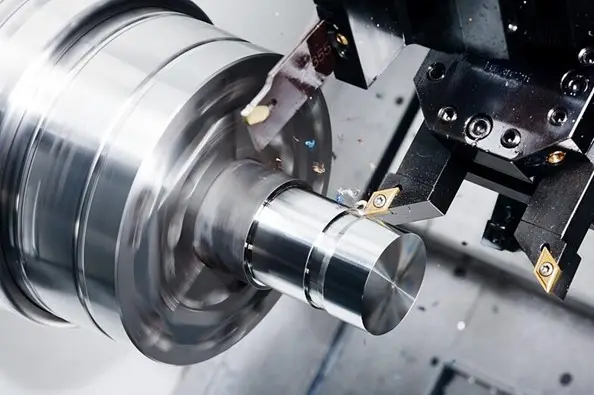
CNC turning is a machining process performed on a CNC lathe, where the workpiece rotates while the cutting tool remains relatively stationary and moves along programmed paths.
The cutting tool removes material from the rotating workpiece to create precise cylindrical, conical, threaded, or stepped shapes.
Typical CNC Turning Applications
CNC turning is ideal for manufacturing rotationally symmetrical parts, including:
· Shafts
· Bushings
· Sleeves
· Pins
· Couplings
· Hydraulic fittings
· Threaded components
· Valve parts
Because the workpiece rotates at high speed, CNC turning offers excellent dimensional accuracy and surface finish for round components.
Advantages of CNC Turning
· High machining efficiency for cylindrical parts
· Excellent concentricity and roundness
· Cost-effective for large production runs
· Suitable for a wide range of metals and plastics
· Capable of tight tolerances and smooth surface finishes
What Is CNC Milling?
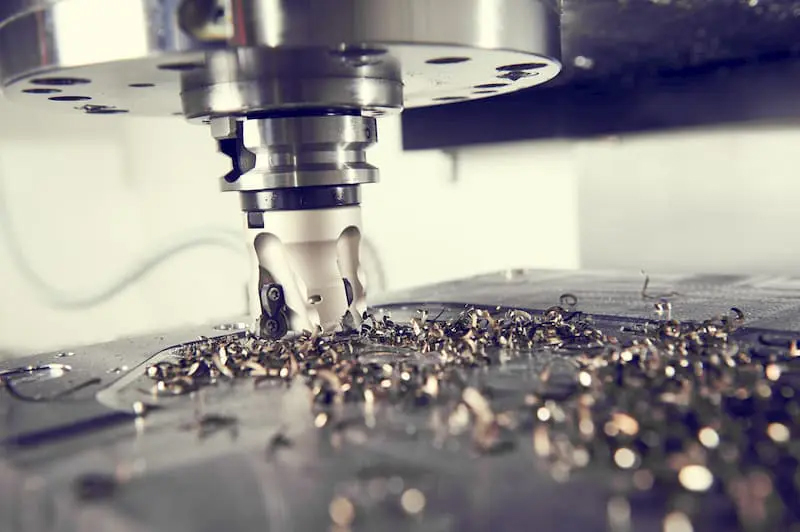
CNC milling uses a rotating cutting tool while the workpiece remains fixed on the machine table. The cutter moves along multiple axes (X, Y, and Z) to remove material and create complex geometries.
Modern CNC milling machines can be configured as:
· 3-Axis CNC Milling
· 4-Axis CNC Milling
· 5-Axis CNC Milling
These advanced systems allow manufacturers to produce highly complex components with exceptional precision.
Typical CNC Milling Applications
CNC milling is commonly used for producing:
· Housings
· Brackets
· Flanges
· Heat sinks
· Mold components
· Aerospace parts
· Turbine blades
· Medical equipment components
· Custom precision parts
Advantages of CNC Milling
· Suitable for complex geometries
· Multi-face machining capabilities
· High flexibility for prototype and production work
· Excellent surface quality
· Compatible with a wide range of materials
CNC Lathe vs CNC Milling: Main Differences
|
Feature |
CNC Lathe |
CNC Milling |
|
Workpiece Movement |
Workpiece rotates |
Cutting tool rotates |
|
Best For |
Cylindrical and rotational parts |
Complex shapes and irregular geometries |
|
Machining Direction |
Mainly along rotational axis |
Multi-axis movement |
|
Production Efficiency |
Very high for round parts |
Better for complex components |
|
Setup Complexity |
Relatively simple |
More complex |
|
Cost Efficiency |
Lower for shaft-type parts |
Better value for complex designs |
When Should You Choose CNC Turning?
CNC turning is typically the preferred solution when:
· The part is primarily round or cylindrical.
· High concentricity is required.
· Large production quantities are needed.
· Threads, grooves, or stepped diameters are involved.
· Cost-effective production is a priority.
Examples include:
· Hydraulic cylinder components
· Motor shafts
· Pipe fittings
· Bearing sleeves
· Valve stems
When Should You Choose CNC Milling?
CNC milling is often the better option when:
- The part contains flat surfaces, pockets, or contours.
- Multiple faces require machining.
- Complex 3D geometries are involved.
- Tight tolerances are needed on several surfaces.
- Custom or low-volume production is required.
Examples include:
- Machine housings
- Structural brackets
- Aerospace components
- Tooling parts
- Precision fixtures
Modern CNC Machining Trends
Higher Precision
As manufacturing requirements continue to increase, CNC equipment now routinely achieves tolerances within microns, making it suitable for aerospace, medical, and high-performance industrial applications.
Multi-Axis Machining
4-axis and 5-axis machining technologies allow manufacturers to reduce setups, improve accuracy, and produce highly complex components in a single operation.
Smart Manufacturing
Advanced CNC systems are increasingly integrated with automation, sensors, and digital monitoring technologies to improve efficiency, consistency, and production control.
Turn-Mill Combination Machining
Many modern machines combine turning and milling capabilities in one platform, reducing handling time and improving overall production efficiency.
Conclusion
Both CNC turning and CNC milling are indispensable manufacturing technologies. The best choice depends on the geometry, tolerance requirements, production volume, and application of the part.
· Choose CNC turning for shafts, bushings, fittings, and other rotational components.
· Choose CNC milling for complex parts with multiple surfaces, pockets, slots, and intricate geometries.
In many modern manufacturing projects, both processes are combined to achieve optimal precision, efficiency, and cost control.
About T&B
T&B is a professional metal manufacturing supplier specializing in:
· CNC Machining
· Precision Turning & Milling
· Metal Casting
· Forging
· Sheet Metal Fabrication
· Welding Assemblies
· Surface Treatment & Finishing
· Custom OEM & ODM Manufacturing
With extensive experience serving customers across Europe, North America, and other global markets, T&B provides high-quality metal components with strict quality control, competitive pricing, and reliable delivery.
Whether you need prototype development or large-scale production, our engineering and manufacturing teams are ready to support your project from concept to finished product.
Contact T&B today to discuss your next custom manufacturing project.